Mandate of Love
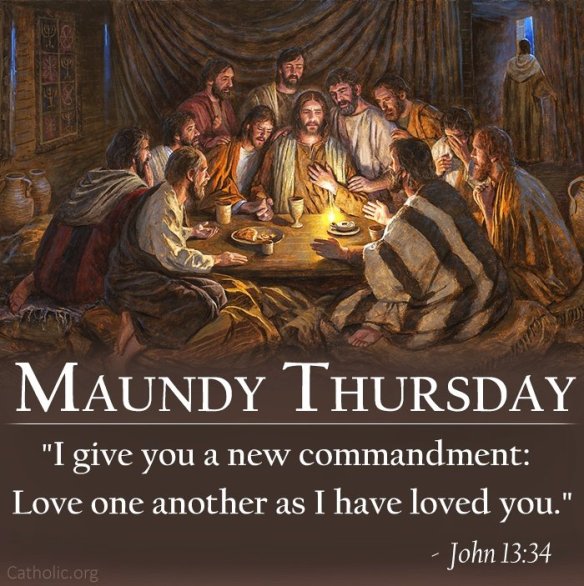
Maundy Thursday draws us into a quiet, intimate space—the upper room.
It is easy to see this as a moment in history, something that happened long ago. But if we listen more deeply, we begin to realize: this room is not just a place—it is a mirror. It reflects something of our own spiritual journey, our own discipleship.
Because the upper room is also the inner room of the heart.
It is the place we enter when we step away from distraction and allow ourselves to be present with God. Discipleship does not begin with action. It begins with presence.
And then comes the unexpected.
Jesus rises from the table, removes His outer garment, and wraps a towel around Himself.
This is more than an act of service—it is a revelation. He lays aside what identifies Him in the eyes of others and takes the position of a servant. In this, we see the deeper invitation of discipleship: the laying down of ego, status, and the need to be seen.
Following Christ is not about becoming impressive.
It is about becoming available.
The towel becomes a symbol of this life.
It represents a posture rather than a single act—a way of being in the world. The disciple is not known by title or recognition, but by the quiet willingness to kneel, to serve, to love without drawing attention to oneself.
Then there is the basin.
It holds water, but also something more confronting: reality. The dust on the disciples’ feet is not avoided—it is touched, washed, and held. This is the deeper work of love.
Because discipleship is not lived in ideal situations or perfect relationships. It is lived in the ordinary, messy reality of human life. It asks us to love what is imperfect—both in others and in ourselves.
And perhaps most striking of all: Jesus washes every foot.
Even the feet of the one who will betray Him.
Even the feet of the one who will deny Him.
Here, the meaning deepens.
We are invited into a love that is not controlled by outcome. A love that does not depend on how it is received. A love that remains faithful, even when it is not returned.
This is not easy.
We tend to love where it is safe, where it is mutual, where it is appreciated. But the love revealed on Maundy Thursday stretches beyond that. It is vulnerable. It is open. It is costly.
Peter’s reaction feels very familiar.
“You shall never wash my feet.”
It is hard to be served. Hard to be seen in our need. We would often rather give than receive, rather appear strong than admit vulnerability.
But Jesus insists.
Because discipleship is not only about serving—it is also about allowing ourselves to be loved. To be washed. To be met in our weakness.
Without that, something essential is missing.
Then comes the table.
The bread and the cup are not just symbols to observe—they are an invitation to participate. They speak of a deeper reality: that the life of Christ is not only something we follow, but something we receive within us.
We are nourished by His way of being.
And then comes the command:
“Love one another as I have loved you.”
This is where everything comes together.
The command is not separate from the act—it flows from it. The towel comes before the words. Love is first shown, then spoken.
Discipleship, then, is not an idea. It is a lived reality.
It is found in small, often unnoticed moments:
in choosing patience instead of frustration,
in offering presence instead of quick solutions,
in staying when it would be easier to walk away.
Maundy Thursday invites us to reflect honestly:
Where am I resisting being loved?
Where am I holding back from serving?
Where do I keep my love within safe limits?
This night does not give easy answers.
Instead, it invites us into a way of life—a way shaped by humility, surrender, and quiet, faithful love.
A way of the towel.
A way of the table.
And perhaps, if we are willing, a way that slowly transforms who we are becoming.


